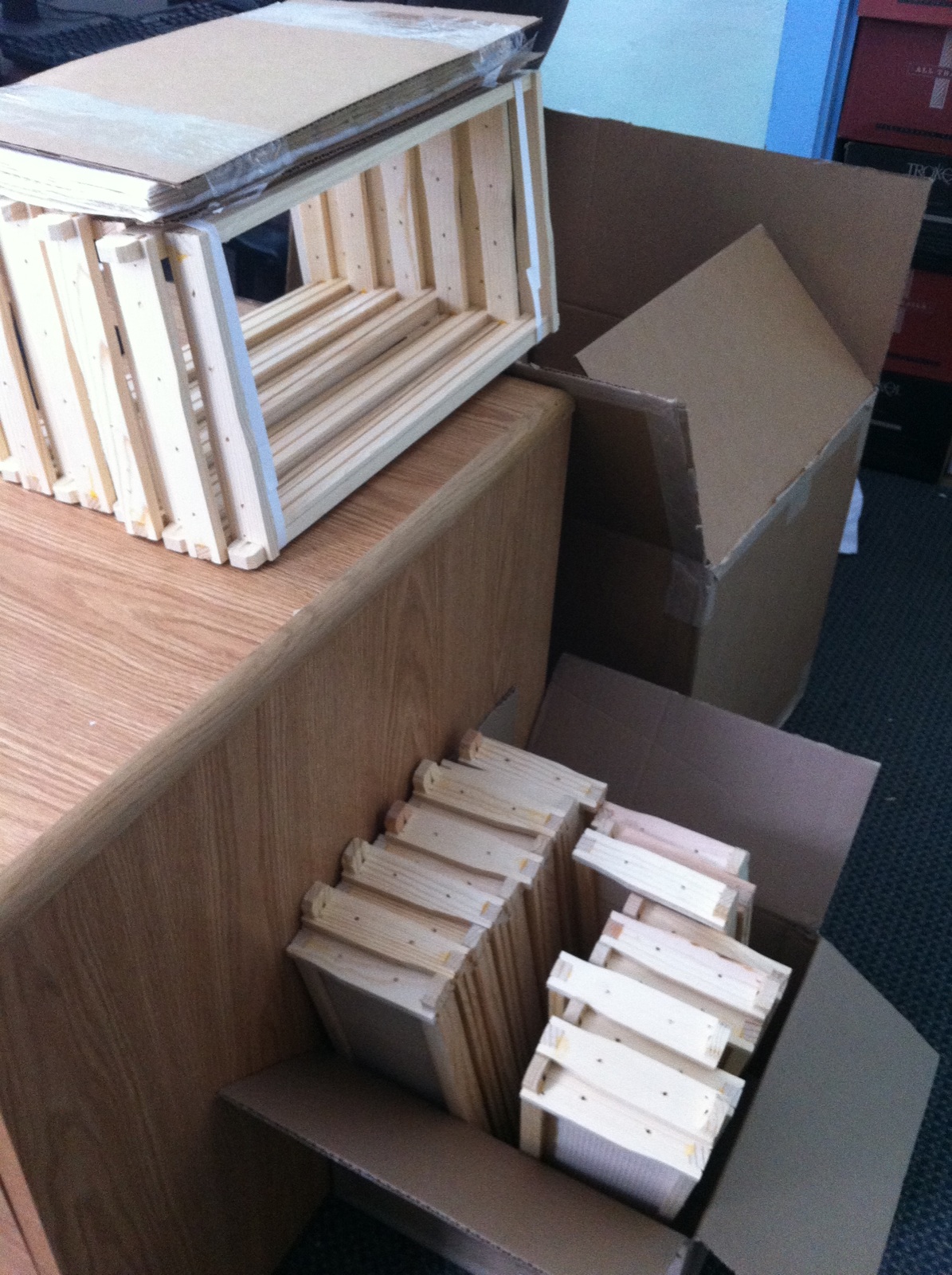

Last year, you might have had the chance to take a peek inside our observation honeybee hive. This year, we’re giving the observation hive some neighbors: a Langstroth hive and a top-bar hive. Langstroth hives are the boxy hives used in commercial beekeeping operations. They require lots of assembly ahead of time (I’ve been putting together frames for the last few days, and Angelo has been putting together the boxes themselves), but once they’re in place, the bees use the space in a very orderly way. Top-bar hives take a more natural approach, essentially leaving the bees to make their own waxy comb, which means that sometimes the honey and wax get formed in strange shapes that make for a very sticky mess when it comes time to untangle them!
Both types of hives have the potential to produce honey that we can harvest for use in the dining hall or farm snacks, unlike the observation hive, which doesn’t have enough space for the bees to make honey in any great quantity. We’ll keep our fingers crossed for a good strong nectar flow, which is what determines how much honey a colony can produce.
The bees won’t arrive until April or May, but these cold snowy months are the perfect opportunity to get everything set up so that the bees’ new homes are ready and waiting for them when they get here. In the meantime, my office is full of honeybee hive parts!